Your first GTM agent on Claude Managed Agents takes only one afternoon to build. Excitement! But keeping it running takes a dozen tools and an engineering team. Not so exciting. There’s a better option. A centralized AI agent platform can get powerful GTM agents to production faster, requires less maintenance, provides critical governance, and costs less to run overall.
Picture a RevOps team at a midsize SaaS company. Leadership wants every inbound lead researched, scored, routed, and emailed within minutes. A GTM engineer builds the agent on Claude Managed Agents, and the prototype works. The concept is proven. But then the agent meets real leads.
How an in-house inbound GTM agent build unravels
Day one goes well. The engineer writes a coordinator agent with sub-agents for research and scoring, and the first test email looks sharp.
Production requires more than one successful run, however. The agent must fire on every one of hundreds or thousands of new HubSpot leads, which takes a workflow engine. Reps need a Gmail sign-in flow, and sales wants a real live person to approve each email. Two weeks later, the process goes live on three new tools.
Then sales asks for a routing change. The sales ops lead knows the rule but can’t edit the agent. The request waits days in the engineering queue and then ships with a bug. Large existing accounts lose their account owners. The engineer adds an automated testing setup, guessing at what good sales outcomes look like.
Next, marketing hands over 600 webinar leads for next-day delivery. The engineer builds a job queue, workers, rate limits, and retries. The job dies overnight, and a retry loop burns $10,000 in tokens.
A month later, a large batch of conference leads with only personal Gmail addresses match to the wrong companies. No alarm fires, and a rep catches the error in a live email. More tools follow for tracing and alerts.
By quarter end, finance questions the AI bill. Every step still runs on Claude, even routing, which never needed a model in the first place. When a rep leaves, IT hunts for access across vaults, permission policies, GitHub, and the console.
An AI agent platform would have handled each of these jobs from day one. Chaos averted.
The real cost of building in-house AI agents
Building an AI agent stack on your own may sound easy or low cost, but the result in this scenario shows how just one process now runs on a stack of tools nobody ever planned to own or manage. This ends up being very expensive. The cost shows up in three places.
- Maintenance overhead: every tool ships on its own release schedule. Upgrades, security fixes, and updates that break existing setups land on engineers as tickets, weekend upgrades, and text messages at 2 AM.
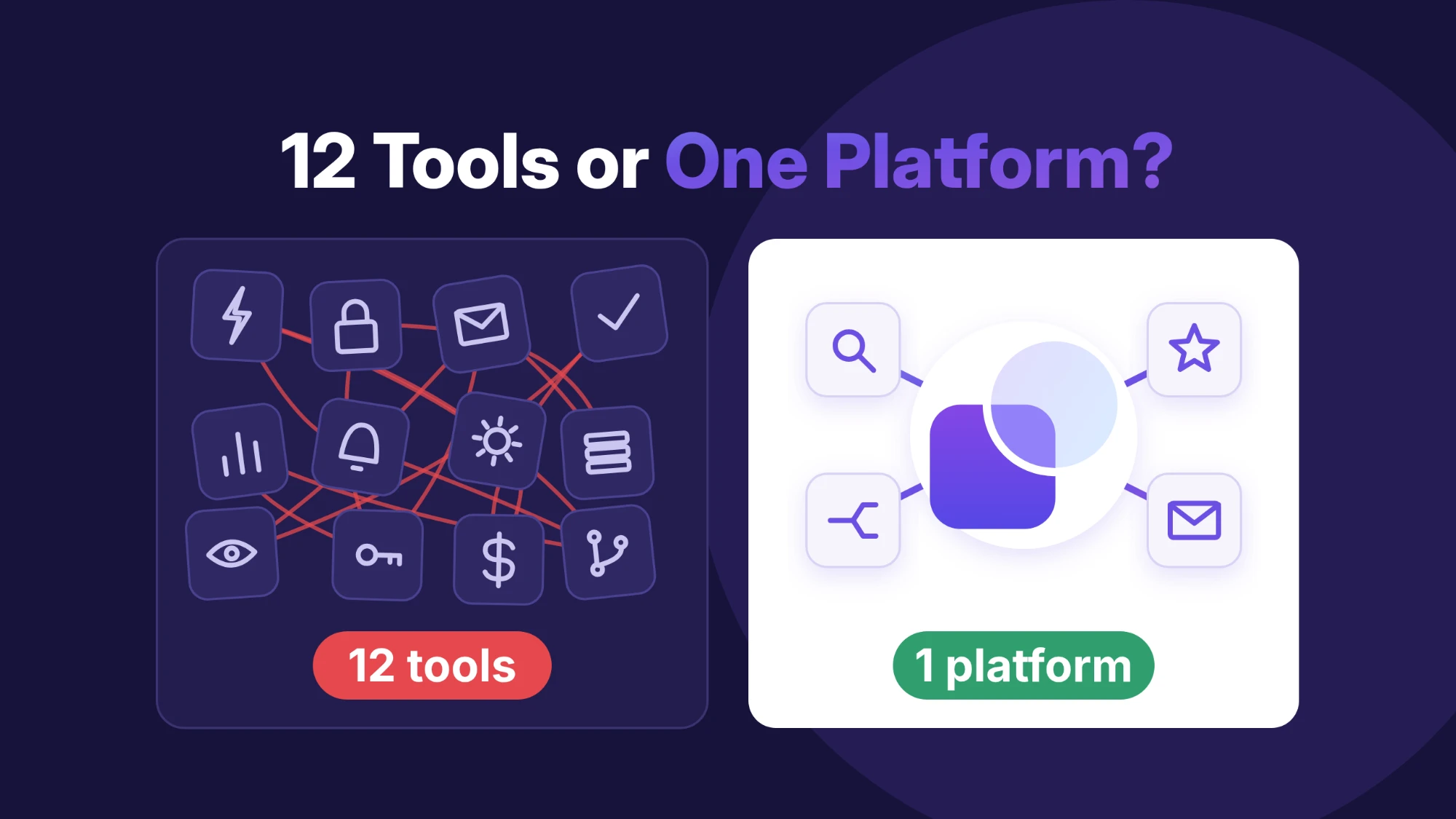
- A complicated tech stack: one process needs separate tools for triggers, sign-ins, approvals, evals, bulk jobs, monitoring, permissions, and cost tracking. Engineers wire them together and then own every seam.
- Slower, lower-quality agents: domain experts can’t change or test the agents themselves. Every fix waits in an engineering queue, and engineers guess at what good looks like.
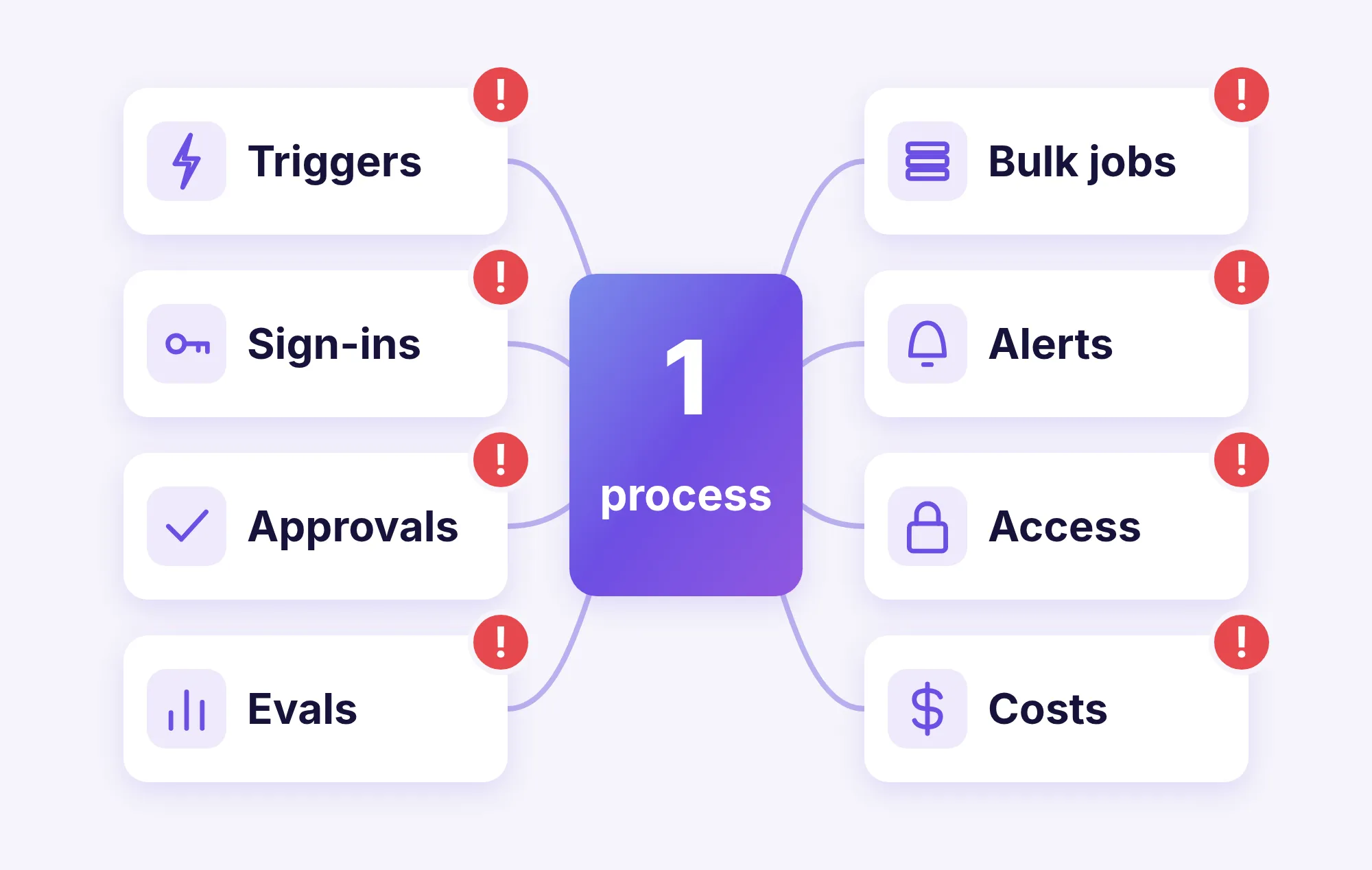
One GTM process built in-house needs eight separate tools, and engineers maintain every one.
Now multiply this scenario across all of the processes that the team wants to automate with agents. A GTM roadmap often holds 10 or more processes. Each one adds to the stack and the backlog, and agent sprawl sets in.
The same GTM inbound agent scenario on a centralized AI agent platform
Relevance is a centralized AI agent platform. On Relevance, the sales ops lead describes your process to Invent, its AI solutions engineer. Invent builds a high-performance specialist agent for each step, with tests for every rule, and monitoring from day one. The HubSpot trigger, account connections, and approvals come built in, and the process goes live the same day.
The rest of the year plays out much more smoothly. The sales ops lead asks Invent for the routing change. Invent tests it and writes a new eval with the ops lead. Marketing uploads the webinar CSV and runs it overnight. The AI agent platform handles rate limits and shuts down jobs stuck repeating themselves. Invent’s monitoring flags the Gmail mismatch in Slack and proposes a fix.
Costs drop too. Research and scoring run on open-weight models like GLM and DeepSeek. Routing runs as a plain rule, and only the customer email uses the latest Claude model. When a rep leaves the company, removing them from the org ends their access everywhere.
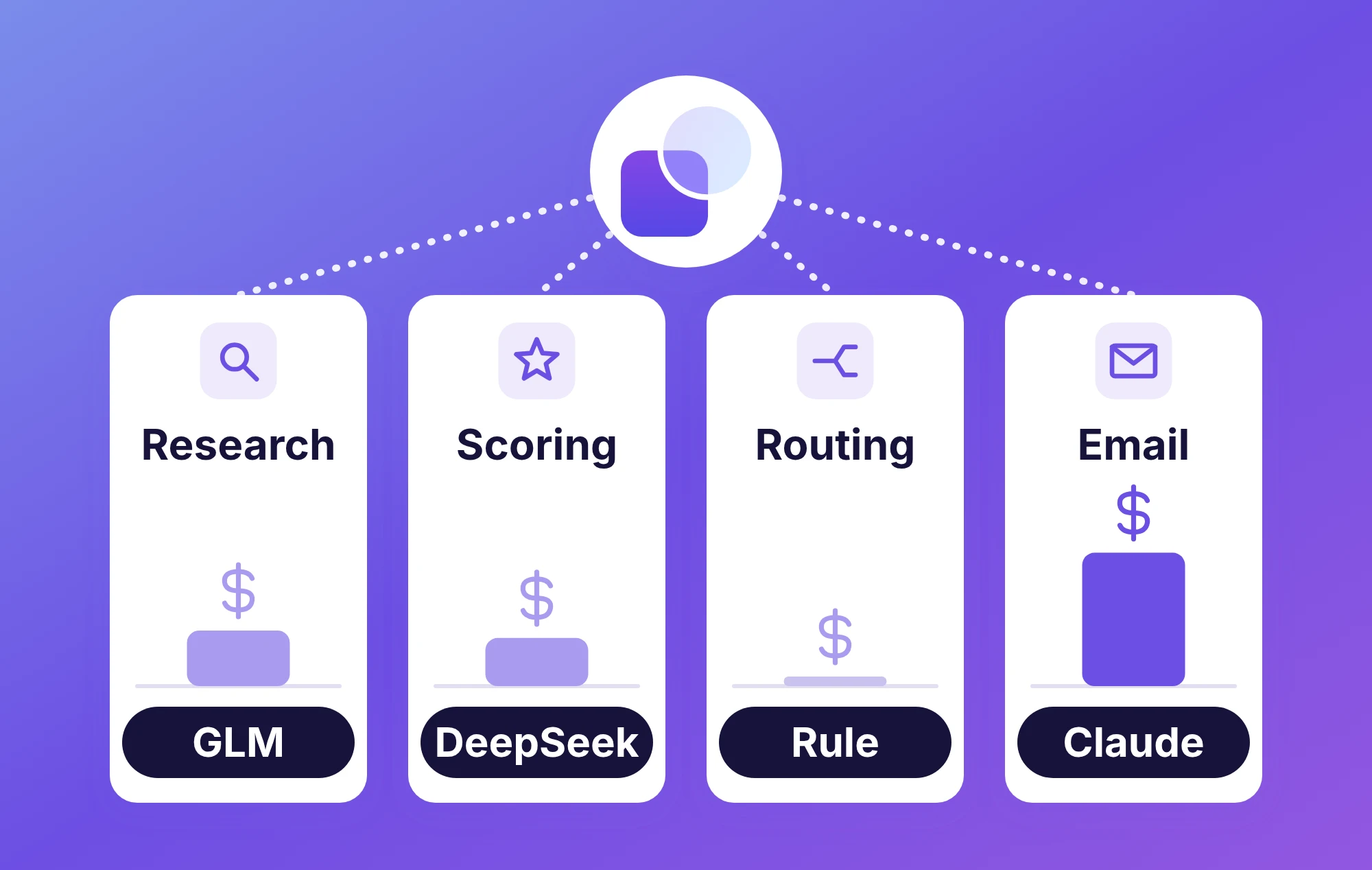
Relevance AI runs each step on the cheapest model that passes its tests.
Why a centralized AI agent platform delivers higher ROI for GTM agent use cases
Invent keeps managing every agent after launch. Invent remembers why each agent exists, watches its real runs, and proposes fixes when performance drifts. The 10th process gets the same care as the first.
ROI from an AI agent platform comes from four places:
- Faster speed to production: processes go live the same day instead of after weeks of infrastructure work.
- Lower cost over time: each step runs on the cheapest model that passes its tests.
- Fewer mistakes: domain experts help test every change, and live monitoring catches any issues that pop up to address them before they impact your business.
- Stronger governance: one org controls access, and every agent records who changed it.
Claude makes individual people far more productive. High-scale GTM automation needs an AI agent platform built to run it.
Find out how an AI agent platform can deliver the performance, scale, and ROI your GTM team needs. Request your demo today.